
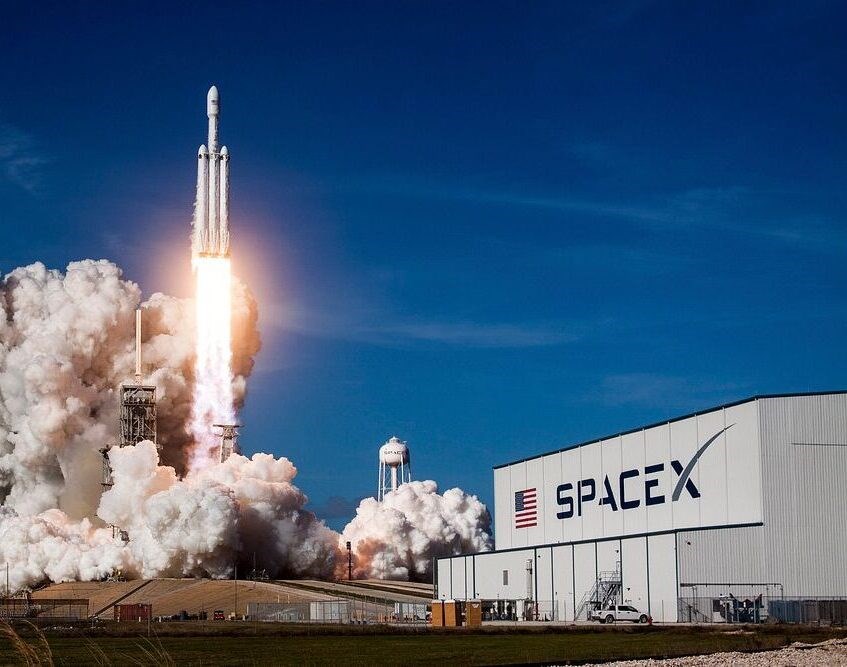
Perhaps the most uplifting story emerging from our rapidly changing technological landscape is how private enterprise today has the power to transform the cosmos. In fact, the next wave of such innovations is not just about removing barriers but actually redefining what will soon be possible for humanity among the stars. And as we explore the future of space exploration below, it is clear that these kinds of advancements are not just closing gaps when it comes to orbital access; they are also helping to make strides toward a multi-planetary future.
Breaking Down the Financial Barrier:
The present times are witnessing opportunities available for those who have easy access to technology and information, which was never the case. But it has also come in with a greater divide that exists between government-backed agencies and the commercial sector. For decades, the narrative of spaceflight was dictated by a single constraint, which was the astronomical cost of leaving the atmosphere. You might recall an era where launching a single kilogram into orbit aboard the Space Shuttle cost more than $54,000. This price tag effectively barred everyone except the wealthiest nations from participating in the space economy. Yet when we speak of the latest role of private companies in space exploration, it would not sound impractical to say that this barrier is crumbling. Protection is now available for startups and universities to equally launch satellites and conduct research.
Revolutionary Leaps in Aerospace Engineering:
The Era of Reusable Rockets:
One of the most historical advancements in aerospace technology occurred when commercial ambition and engineering agility were combined. This assisted the private entities in exhibiting control of devices employing reusable hardware. Since these systems come back to Earth to fly once again, these technologies enable humans to have direct access to space at orbital distance, with as much autonomy as desired.
Think over the physics and economics of the situation. Under the conventional approach, a rocket was constructed, launched once and disposed of in the ocean. It was like constructing an aircraft, Boeing 747, flying it between New York and London, and scrapping the entire airplane after one journey. Such a journey would cost millions of dollars in terms of ticket price. This logic was challenged by the private companies such as SpaceX. In 2015, they landed the first stage of their Falcon 9 rocket, thereby demonstrating that hardware could be recycled. The cost of launching this innovation has reduced to less than 3000 dollars per kilogram. This drastic decrease leads to a frequency of launches that was not possible before. In 2023 alone, there were successful launches around the world, which exceeded 200, which is many times higher than launch rates in the 20th century.
Accelerated Development via Commercial Risk-Taking:
The use of government contracting has gone as far as benefiting national security and scientific prestige. The subsequent generation of such tools, however, is emerging to use rapid prototyping so that you can actually iterate on designs in real time. This not only aids in making the use of a rocket or a spacecraft safer, but it also creates new means of expressing engineering creativity and a way to get results faster.
Government agencies often operate under immense pressure to avoid failure, leading to slow development cycles and bureaucratic hurdles. The same cannot be said of the private companies. They view failure as data. When a private prototype explodes on a test stand, it is not a program-ending disaster but a lesson learned. This agility is evident in companies like Relativity Space, which utilises massive 3D printers to manufacture entire rockets. By reducing the part count by a factor of 100 and shrinking manufacturing time from years to months, they are rewriting the rulebook of manufacturing. This speed allows the latest technological landscape trends to permeate the aerospace sector, ensuring that the technology launched today is state-of-the-art rather than a decade old.
Bridging the Digital Divide with Low Earth Orbit Networks:
Both low Earth and geostationary orbits are not just limited to the government sector. It also creates a massive difference in the connectivity solutions being offered, which means that every person, for example, in a remote village can receive high-speed internet, interacting with satellite constellations. On the other hand, the data activities performed using these satellites prepare businesses for various economic scenarios.
You are likely witnessing this revolution first hand where the deployment of mega-constellations like Starlink and Kuiper is bridging the digital divide on Earth. These networks consist of thousands of small satellites communicating with each other via lasers in the vacuum of space. They provide low-latency internet to war zones, disaster-stricken areas, and rural communities that fibre optics will never reach. This is a tangible benefit of the role of private companies in space exploration. It is not just about planting flags on Mars. It is about improving the quality of life right here on Earth. The data collected by privately owned earth observation satellites helps farmers monitor crop health with precision agriculture and allows climate scientists to track environmental changes in real time.
Next-Gen Transportation and Commercial Habitats:
Humans are nomadic creatures who always prefer to move. While our demand for mobility is endless, the ability to keep on developing new pathways and infrastructure may never be realised in a time frame that meets society’s needs due to budget conflicts, environmentally supportive development, private and chained transport complexities and related financial or energy supply constraints. To fulfil these global desires, space-related activities require advanced methods of transportation that minimise travel time while ensuring the best match with socio-community demands, socio-economic possibilities, health concerns and environmental stewardship. The next generation of space technologies is similarly changing the way people with commercial interests get around. Commercial space stations like the proposed Orbital Reef are set to replace the International Space Station. These business parks in orbit will host researchers, manufacturers, and tourists, giving them more control over their mission parameters, while deep space transport vehicles are providing an ever greater range of mobility and functionality.
Unlocking New Economic Frontiers Beyond Earth:
Though access to technology is just a beginning, the final goal is to close the economic gaps that non-spacefaring nations face. Next-Gen space tech innovations are not only an answer to accessibility but also a powerful way of inspiring and challenging individuals to explore various professional fields.
We are transitioning from an era of exploration to an era of utilisation. Private companies are looking at asteroids not as distant rocks but as resource repositories rich in platinum, gold, and rare earth elements. The potential uses of the resources mined in the areas would be to ease the scarcity on the planet and bring about a new industrial revolution. Furthermore, the vacuum of space offers a unique manufacturing environment. Companies are already experimenting with producing fibre optic cables that are free of defects and pharmaceuticals with purer crystal structures. These products, manufactured off-world, could revolutionise industries back home. Future business growth strategies will likely involve a supply chain that extends beyond the atmosphere, creating jobs and wealth in sectors that did not exist a decade ago.
The Future Workforce of the Orbital Economy:
As flexible and remote work styles become more prevalent with time, the convenience of working on a digital platform will be even more important. Next-gen space technology demands that remote collaboration tools, software and communication platforms should be developed with inclusivity in mind, wherein enabling astronauts and commercial participants as well to contribute in project or participate in virtual meetings with ease.
The vision of the future includes millions of people living and working in space. Blue Origin, for instance, envisions a future where heavy industry is moved off Earth to preserve our planet. This requires a workforce. You might one day find yourself commuting not to an office block but to a space station. The infrastructure being built today by private entities is laying the groundwork for this reality. It changes the perception of a career in space from being an astronaut pilot to being a space architect, a zero-gravity doctor, or an orbital mechanic.
Democratizing Scientific Research in Space:
Therefore, the science of the private space sector is changing with the offering of research environments which are suitable and accommodating. On this note, we are discussing commercial laboratories and accessible education software that can be entertaining as well as informative. These awesome innovations were meant to fit the needs of the researchers as they learn. Moreover, private missions with the special accommodation guarantee civilian scientists to engage in biological discussions and physics projects like everyone else.
In the past, if a university wanted to send an experiment to space, the wait times were years long, and the costs were prohibitive. Today, thanks to the ride-share programs offered by companies like SpaceX and Rocket Lab, a small CubeSat can be launched for a fraction of the price. This democratisation means that students in high schools and universities are now building hardware that actually goes to space. It inspires the next generation of engineers and scientists by giving them hands-on experience with the final frontier.
Artificial Intelligence as the Pilot of Future Missions:
Artificial intelligence is not just here to help with career gaps, as we have seen. It has only been made possible by the use of artificial intelligence in the workplace that one can assess the capabilities and capacities of rockets with various trajectories, and help them to secure the right orbits that suit their mission profile. Apart from that, these platforms also have self-directed skill training provisions so that people are capable of fostering their appropriate strengths and obtaining jobs that they truly desire to pursue. It is akin to having your very own personal, private career specialist beside you all the time!
In this race of space, AI and machine learning are the essential collaborators of this privatization. They are used to calculate complex trajectories, automate docking procedures, and analyse the massive amounts of data returned by satellites. Innovation in digital markets is fueling the software that runs the hardware. In your case, it is that the future space economy depends heavily on computer science and data analysis skills. AI gives the possibility of autonomous operation, so there is no necessity for huge ground control teams, which significantly decreases the cost of space missions' operation.
Navigating the Ethical and Regulatory Cosmos:
Although we have reached great heights, there are some concerns that we have not been able to address or seek a solution to. The following are some of the areas that I think we need to bring more attention to: affordability, space debris and the continuous need for regulation. These technologies should be extended to other people so that they are informed that such technologies could be of help in future.
Every time we put up another satellite, we are pressed on the problem of orbital crowding. The private firms should set the pace in South-sustainability, including de-orbiting ancient satellites and creating space junk cleaning technology. The issue regarding regulation also exists. The Outer Space Treaty of 1967 did not envision the creation of a world where Elon Musk or Jeff Bezos could place thousands of satellites. New structures are required to regulate traffic and property rights in space. The ethical implications of a privatised cosmos also have to be taken into account by you. We should make sure that space will always be a field for the whole of humanity and not a playground for the ultra-rich. The global trends in the year 2026 show that sustainability and ethical governance will be great motivators in consumer preference, and this will be the case in space companies.
Conclusion:
In summary, the prospect of the next wave of space technologies, or the ‘New Space’ technologies recall the light of hope that aspiring explorers can embrace in order to foster a “cosmos” inclusive society. In addition to overcoming barriers of gravity and economic gaps, these applications also reshape boundaries of what is achievable for people with dreams. While following these innovations, one must enhance synergy between technology creators, governmental authorities, and non-governmental organizations. Taken together, it is possible to build the future that everybody desires, and atmospheric barriers disappear, and equality is established to the fullest in the new solar system.


Leave Comment